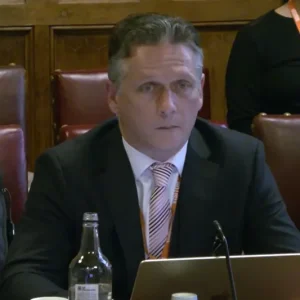
Regulator receiving 150-170 applications to register children’s homes per month, but less than one in ten meet prioritisation criteria, Ofsted chief inspector Martyn Oliver tells children’s services leaders.
Applications to register children’s homes are generally “of very low quality”, amid a surge in their number, Ofsted’s chief inspector has warned sector leaders.
Martyn Oliver told the National Children and Adult Services Conference (NCASC) last week that the regulator was receiving 150-170 applications per month to register homes, up from 30-50 previously, and had a backlog of 1,082.
However, just 6-10% of applications met its prioritisation criteria, which are designed to ensure homes that tackle local shortages in provision, as well as those that provide emergency placements for children, are handled first.
Surge in children’s home numbers
The number of registered children’s homes in England has doubled in the past six years, with a 20% hike in the year to 31 March 2026 alone, Ofsted data has shown.
Oliver told NCASC delegates that there were now over 5,000 homes registered in England, up from 3,200 in January 2024, when he became chief inspector.
He said the regulator had doubled the size of the team dealing with the applications, but needed more capacity to clear the backlog, which, Oliver added, was “going up and up”.
Updated prioritisation policy
Last autumn, it amended its prioritisation policy to deal with the surge in numbers.
Previously, it only prioritised applications relating to emergency placements for named children who were deprived of their liberty in an unregistered home or unaccompanied asylum-seeking children being moved under the national transfer scheme, or in relation to undefined “exceptional circumstances”. Otherwise, applications were handled on a first-come, first-served basis.
Under the revised policy, prioritisation was extended to applications for homes in areas with “extremely high demand and insufficient placement options” and “highly specialist” provision for children with complex support needs, disabled children or those leaving secure care or long stays in hospitals.
Ofsted also said it would prioritise homes that were historically registered incorrectly and had been instructed to register with an alternative regulator, or those financed by Department for Education capital funding.
The regulator added that it would generally register priority applications within six months, so long as the applicant had provided it with the right information at the right time and was ready to open.
It provided no timeframe for registering non-priority applications.
Children’s home applications ‘of very poor quality’
In his NCASC speech, Oliver said: “In general, the applications we’re getting are…of a very poor quality. We need more capacity to deal with them and clear this backlog.”
As well as doubling the size of the relevant team, he said the organisation was also investing in a new IT system, designed to enable applications to be processed more quickly and allow providers to track the progress of their cases.
Oliver was challenged by a director of children’s services on how long it was taking to register even priority homes, with the DCS arguing that six months was a long time in a child’s life.
In response, he said: “Tell us, as a DCS, if you have a series of homes who will meet the needs of children in your area, tell us what they are and we will go as fast as we can.”
Unregistered home providers ‘motivated by profit not care’
Oliver also launched an attack on providers of unregistered children’s homes – which are illegal to operate – saying several were “motivated by profit rather than by the vocation of wanting to care for children”.
“They are attracted by the money that desperate local authorities are willing – unwilling, perhaps, but forced – to pay,” he added. “They rarely attempt to register. And when we do catch up with them, they move and change their name.”
Oliver said inspectors had found “children placed by local authorities in Airbnbs and hotel rooms” or “looked after by staff with no experience in childcare and who have not been checked for a criminal record”.
Use of unregistered homes down significantly
He praised councils’ efforts to bring down use of unregistered homes, including by investing in kinship and foster care and their own residential provision, and said this was bearing fruit.
“In our recent inspections, we are seeing these numbers decline significantly as your efforts bear fruit.”
However, he added: “That is not yet the case in all places. We still have work to do together to eradicate unregistered from the system.”
Directors’ concerns over penalties for unregistered home use
Oliver faced questions over Ofsted’s plans to downgrade councils’ ratings for leadership for using unregistered children’s homes, under planned reforms to the inspection of local authority children’s services (ILACS) framework that it recently consulted on.
These have sparked significant concerns from directors, who have warned that authorities were being forced to use unregistered homes due to an absence of other options.
In its response to the consultation, the Association of Directors of Children’s Services (ADCS) said the plan would result in councils having to send children far from home, or leave them for longer in police stations or hospitals, to avoid using unregistered placements.
One NCASC delegate asked Oliver if Ofsted would distinguish between cases of poor-quality unregistered provision and those where children were placed in settings in the process of being registered.
In response, the chief inspector said: “So many times we are told that people are waiting to register. But when we look at the application it is often a poor-quality application that looks like it was never intended to be processed.”
He said that Ofsted could not distinguish between different types of unregistered provision, as it was “all illegal”.
Source: Community Care