The government has rejected calls to ban social media for under-16s after it defeated an amendment to the Children’s Wellbeing and Schools Bill that would have introduced such a measure.
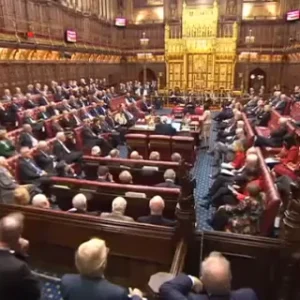
MPs voted 307 to 173 against the proposal for an outright ban, which was put forward by the House of Lords following extensive scrutiny of the bill earlier in the year. However, more than 100 Labour MPs abstained.
-
Comment: Empowering families is key to children’s digital wellbeing
-
Analysis: Children’s social media ban – how would restrictions work?
Speaking in the House of Commons on Monday, education minister Olivia Bailey said that while many parents and campaign groups have called for an outright ban on social media for under-16s, “others, including children’s charities, have warned that a blanket ban could drive children towards less regulated corners of the internet or leave teenagers unprepared when they do come online”.
Bailey said that is why the government has recently launched a consultation to “help shape our next steps and ensure children can grow up with a safer, healthier and more enriching relationship with the online world”.
Commenting on social media platform, LinkedIn Thomas Barton, executive director at the Council for Countering Online Disinformation, said the fact 100 of the government’s own MPs abstained in the vote highlighted “significant political support for the ban”.
“The consultation will conclude by the summer and government has already brought forward emergency powers so they can implement the ban immediately should they wish to do so post-consultation,” he wrote. “While government is putting process before expediency, it feels like all roads lead to the ban.”
The government’s decision comes a day after a report from think-tank Centre for Young Lives found that 96% of 13–17-year-olds now use social media, with parents, health professionals and some young people themselves becoming increasingly concerned about the scale of risk.
It warns of a “burning platform” in which harms are occurring in real time while research and policymaking struggle to keep pace with rapidly evolving technology.
Alongside age restrictions, the report calls for tighter regulation of platform design features linked to compulsive use, including autoplay, infinite scroll and intrusive notifications, as well as measures to protect sleep and reduce night-time use.
It also proposes a “Play and Recreation Levy” on major social media companies to fund alternatives for young people, including youth services, safe outdoor spaces, sports and arts provision, and safer online platforms that enable social connection without the same risks.
The think-tank’s chief executive Haroon Chowdry said that delaying action would expose more children to avoidable harm.
Meanwhile, Dr John Allan, head of impact and breakthrough learning, at PGL Beyond, called the decision “a missed opportunity to reset children’s relationships with screens”.
“We already know children are spending less time outdoors than ever before – more than a third don’t play outside after school and one in five don’t at weekends,” he said. “It’s a shift that means every hour spent on a screen is an hour lost to physical or outdoor activity – the experiences that are critical to healthy development.
“Time in nature improves mental health outcomes, concentration and resilience in children and teenagers. For children with ADHD in particular, natural settings can significantly reduce symptoms and boost focus.”
In a recent blog, Chris Sherwood, chief executive of the NSPCC, called for the Prime Minister to “stand up to big tech for their failures that continue to put children in harm’s way”.
“We’ve set out three key actions his government must take – ensure under 13s are not on social media, harmful content is blocked at the source, platforms no longer using design tricks that keep teens hooked,” he wrote.
“Without a swift and decisive response a social media ban for under‑16s is coming. We can do better than this for our children, but it is now up to the government to deliver the change needed that will create the safe online spaces families need and deserve.”
Source: CYPNow